
Bringing climate adaptation solutions to farmers in Narok County

October 16, 2026
As climate change continues to place increasing pressure on water resources and agricultural production across Kenya’s dryland areas, farming and pastoralist communities face growing challenges in sustaining their livelihoods under unpredictable climatic conditions. Prolonged dry spells, unreliable rainfall, and increasing competition for scarce water resources threaten food security and the resilience of households that depend on agriculture and livestock.
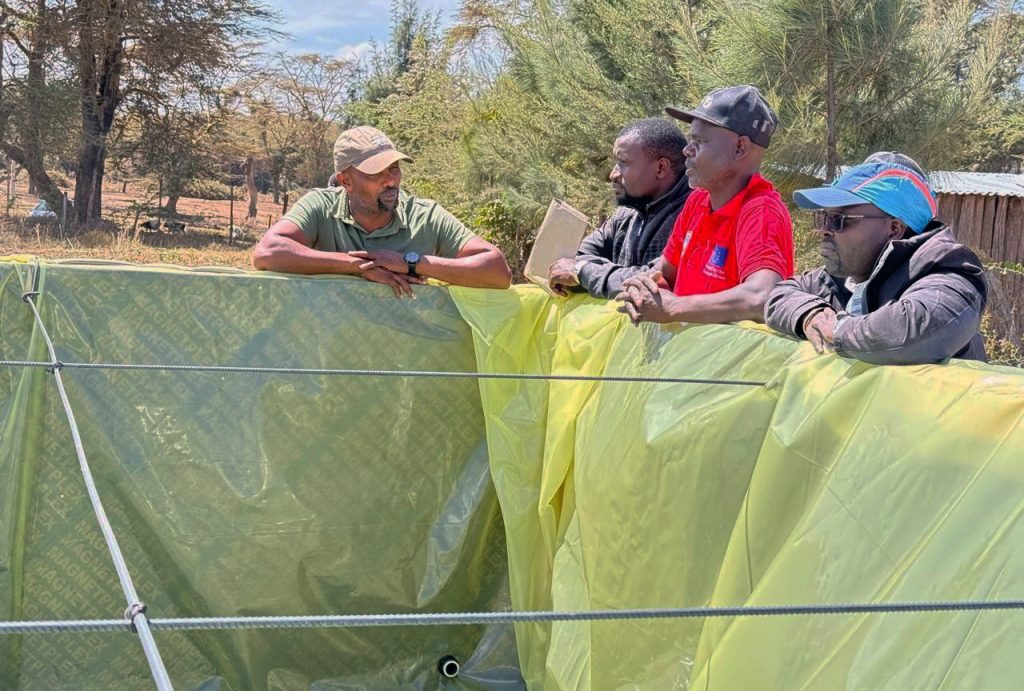
In Narok County, through the SAFE4ALL project, Jomo Kenyatta University of Agriculture and Technology (JKUAT) and the County Agriculture Department are promoting the use of climate information tools alongside practical, affordable, and locally driven climate-smart solutions to help communities adapt to changing conditions. These tools include the Uliza-WI Chatbot, developed by Weather Impact (Netherlands), and the DROP App, developed at Wageningen University (Netherlands).
The local solutions involve the installation and demonstration of rainwater harvesting technologies, drip irrigation systems, and wick capillary irrigation technology. These approaches demonstrate how locally available resources and simple innovations can improve water management and strengthen agricultural resilience. Combining such solutions with climate information tools offers communities practical ways to address the impacts of climate change.
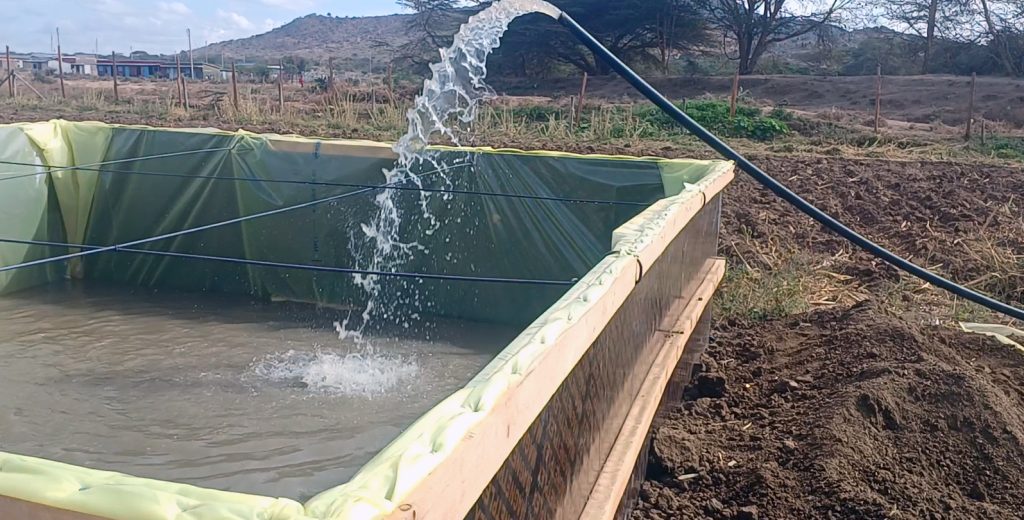
Making every drop count
Rainwater harvesting systems allow farmers to collect and conserve water for agricultural production during dry spells. Drip irrigation delivers water directly to plant roots, reducing unnecessary water loss, while wick capillary irrigation offers an alternative, low-cost method of supplying moisture to crops.
These technologies allow farmers to maintain agricultural activities even when rainfall becomes unreliable, potentially improving household food availability and reducing vulnerability to climate shocks.
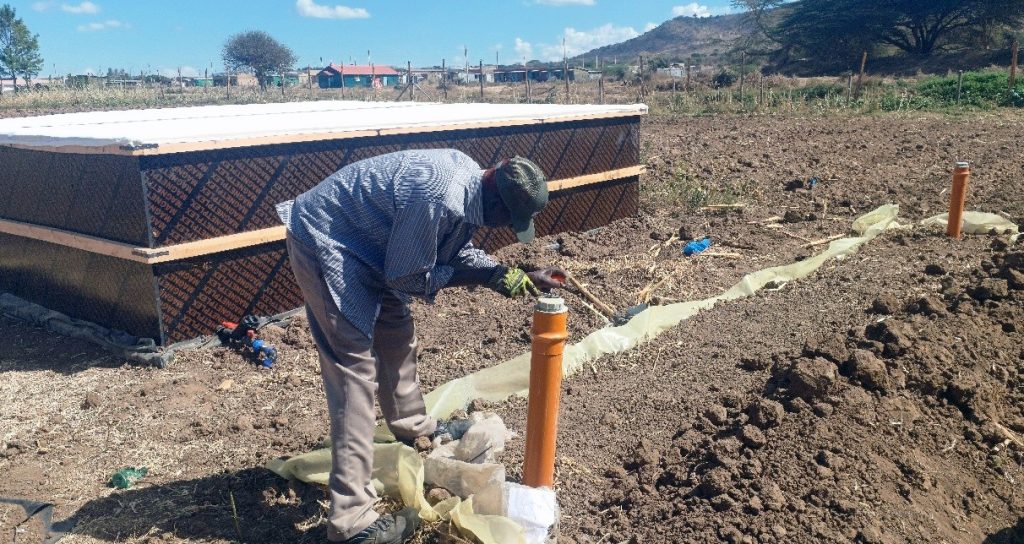
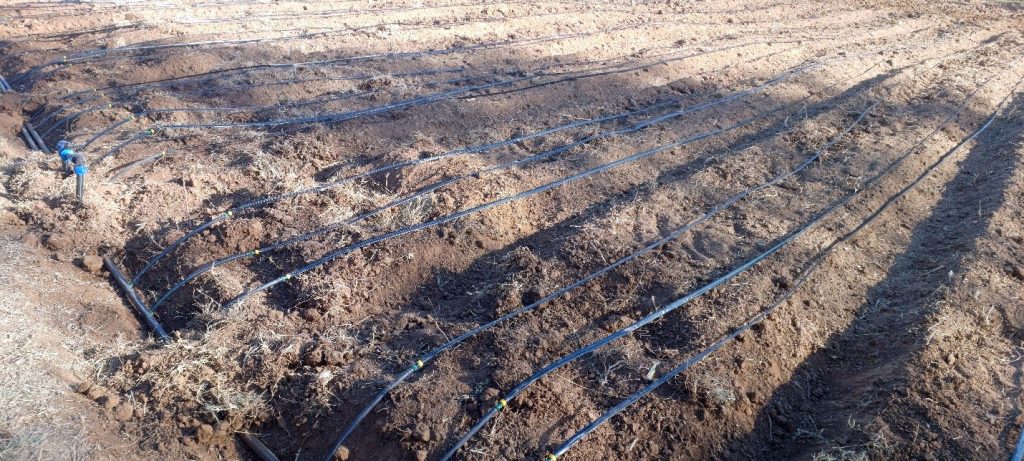
From technology installation to community ownership
A distinctive feature of this initiative is its approach to technology transfer and community empowerment.
Through Community Innovation Centers (CICs), the project works with selected farmer representatives to establish and demonstrate the technologies. These representatives receive practical training during installation, learning how the systems function, how to operate and maintain them, and how to replicate the innovations using locally available materials.
Once the initial installation and training are completed, responsibility for sharing the knowledge and introducing the technologies more widely is gradually transferred to the trained farmers. They become local champions, taking the initiative to establish similar systems and train other farmers within their communities. The SAFE4ALL project and its partners continue to provide technical support and guidance as needed.
This approach creates a multiplier effect, allowing knowledge and practical skills to spread from one farmer to another. It also encourages community ownership and reduces long-term dependence on external technical assistance.
The Community Innovation Centers therefore serve as demonstration sites and local hubs for learning, experimentation, and the exchange of climate adaptation knowledge.
Strengthening food security and reducing pressure on scarce resources
Beyond improving agricultural production, the initiative also has the potential to contribute to food security and peaceful coexistence in communities facing increasing water scarcity.
By harvesting and storing water when it is available and using it for agricultural production during dry periods, farmers can improve their ability to grow food across changing seasons. This can help strengthen household food security and diversify livelihood opportunities.
Improved access to water for small-scale agricultural production could also help ease pressure on shared water resources. In areas where farmers and pastoralist communities depend on the same limited water sources, competition can contribute to tensions and resource-related conflicts. Using harvested rainwater for agriculture may help reduce some of this pressure, supporting more sustainable resource use and peaceful coexistence.
A farmer’s perspective on the opportunities ahead
For farmers observing the installations, these technologies represent more than new irrigation systems. They offer hope for more reliable food production, particularly during the dry season.
One farmer who witnessed the installation expressed optimism about the potential benefits:
“This project will help us provide vegetables for our families, especially during the dry season. When the weather information is combined with these technologies, we shall benefit a lot. We should also extend these initiatives to support fish farming.”
The farmer’s remarks highlight an important aspect of the initiative. Communities are recognizing the immediate benefits of climate adaptation technologies while also identifying opportunities to build on them. The suggestion to explore fish farming points to the potential for further livelihood diversification, improved household nutrition, and more productive use of available water resources, subject to sufficient water availability and technical feasibility.
Such perspectives reinforce the importance of community participation in climate adaptation. When farmers are involved in introducing new technologies, they become more than beneficiaries. They become partners in identifying opportunities, shaping solutions, and envisioning a more resilient future for their communities.
Local innovation for a climate-resilient future
The experience in Narok County demonstrates that climate adaptation does not always require expensive or highly sophisticated technologies. Affordable solutions, locally available materials, practical training, and strong community participation can provide meaningful pathways toward greater resilience.
By combining rainwater harvesting, efficient irrigation technologies, and a farmer led approach to knowledge sharing, the project is helping communities develop practical skills and solutions to respond to climate change.
Ultimately, the ambition extends beyond installing technologies. It is about building communities with the knowledge, confidence, and capacity to innovate, replicate solutions, and support one another.
When farmers become trainers, local knowledge becomes a shared resource, and innovation becomes community owned, climate adaptation has the potential to extend far beyond the initial project installations.